
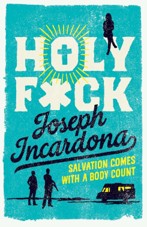
Stella is 19 years old and makes a living as a prostitute. And sometimes, she doesn’t know how and it isn’t a “gift” that she’s asked for, she’s able to heal those that she sleeps with of whatever ails them, often enough that word begins to spread and those who find themselves in need seek her out. And the word really does get out when she cures one man of his chronic psoriasis and he, unable to go home to tell his wife exactly how this miracle has come about, decides to unburden himself in the confessional booth to Father Brown who duly passes the word up the chain of command until it reaches the Pope himself.
And of course, the Pope is joyous! A woman who can perform miracles would instantly become a living saint. That joy quickly turns to ire in discovering exactly how Stella works her magic, prostitution not being something that the Pope can promote. His solution? Hire hitmen to deal with Stella and make a martyr out of her, glossing over the more unfortunate parts of her past as needed. What follows is a madcap adventure as Stella goes on the run with Father Brown (who regrets bringing trouble to her doorstep) and Luis – a young journalist working for a local newspaper who just wants a Pulitzer – chased by the Bronski brothers.
Stella is an interesting character, although one that I didn’t feel that I came to know in great detail. A young woman, she didn’t ask for any of this, and seems a little reluctant to accept what’s happening but goes on the run as she begins to understand more about the men who are on her tail. How or why this ability of hers manifests itself as it does isn’t explained, but the reader sees it for the miracle that is as she cures man after man for a range of symptoms ranging from paralysis to pulmonary emphysema. While Stella doesn’t deserve to be targeted, her methods of delivery are somewhat uncomfortable, although she is a willing participant throughout – no one’s forcing her and no one tries to take advantage of the situation.
I’d be lying if I said that I didn’t enjoy the fun poked at the Catholic Church throughout the novel. I mean no offence to anyone who is a believer, but as an atheist, I enjoyed the way in which the Pope and those closest to him are displayed as pompous old men with the usual double standards. It amused me greatly.
Holy F*ck is a fun, quirky novel that doesn’t take itself too seriously. I enjoyed the author’s quips as he breaks the fourth wall to talk directly to the reader and there are some great, larger than life characters. And I liked the ending. Throughout, I wasn’t sure how Incardona could bring the novel to a close, but he wraps it up successfully.
Recommended if you’re looking for something a little different.
Holy F*ck, the first of Joseph Incardona’s novels to be translated into English, was published by Bitter Lemon Press in April and is available in paperback and digital editions. Huge thanks to Graeme Williams and the publisher for the opportunity to read and review this novel.
Disclaimer – I received a copy of this novel from the publisher. This has in no way influenced my review.
About the Book
Stella works miracles. Literally. She heals the sick and the paralysed, just like in the Bible. The Vatican is overjoyed – imagine, a real saint in the 21st century, and in Georgia, the heart of the American South.
The only hitch? Her method: she heals the people she sleeps with in her motorhome. And she sleeps with a lot of people, it’s what she does for a living. And that’s precisely what’s bothering the Vatican.
For Luis Molina of the Savannah News, this story smells like a Pulitzer for sure. For the Vatican, it smells more like trouble. A saintly hooker isn’t exactly presentable. A martyred saint, on the other hand, has a conveniently rewritten past. That’s a job tailor-made for the Bronski twins – the best contract killers in the business. Provided, of course, they manage to get their hands on innocent little Stella. America is a big place.
Joseph Incardona sets his new story in a dusty, wacky United States. He excels in its film noir atmosphere: travelling funfairs on the outskirts of small towns forgotten by everyone, lost motels, freaks and the disenfranchised. It’s reminiscent of the Coen brothers, Tarantino and del Toro, but also a homage to the novels of Harry Crews.


Fab review, Jo, it does sound fun! x
Thanks, Nicki x
Sounds like a fun read!
Yes! Funny, quirky, and original x
This sounds fun and I’m also not a believer or religious person so i get your feeling.
Thanks, Yesha – to be honest, I think that most people would appreciate the humour whatever their beliefs. Perhaps not the most devout, though.