
EVERY ENDING
IS A NEW BEGINNING.
Ruth is ignoring the news. Like most people, she has relationship problems, job stress, friends and family who need her. Ruth has a life.
But the news is about to catch up with Ruth, and her problems are going to be swept away… along with the rest of the world.
Only when the comforts and complications of her old existence are gone, does Ruth finally realise how she might be able to live to the fullest.
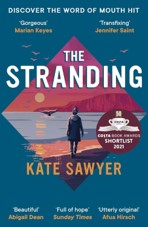
The Stranding is a novel that I heard a lot about at the time of its publication in 2021 but one that I never quite got around to picking up despite the temptation of a new post-apocalyptic novel which sounded right up my street. Spotting a copy in a charity shop recently, I took the opportunity to rectify that and added a copy to my shelves.
The Stranding adopts a dual timeline approach with the two narratives alternating throughout the novel. While this isn’t new to this (or any other) kind of novel, it’s used to great effect here as we understand that while Ruth has travelled to New Zealand, we don’t know her reasons for doing so nor why she’s there on her own. The “before” element of the novel gradually explains that journey, although we meet her a year or so before that decision is made. At that point, she’s leading a fairly typical life – she’s a teacher, and is starting a new relationship with an older and (unfortunately) married man, and has all the typically problems that one might expect. Ruth comes across as being entirely normal as a result and I felt that I could have been friends with her, although she’s far from perfect. One aspect that I particularly like is that she described as having a slightly rounded belly, something that she has always liked about herself. I love that she feels no need to lose weight or achieve the model figure – she’s happy as she is and doesn’t care what anyone else thinks.
It’s clear from this narrative that something significant is underway in the world, although Ruth takes the “ignorance is bliss” approach and avoids the news entirely. While I can understand that – there have been times when I have refused to read or watch anything relating to the news – it does feel a little convenient that the big event when it happens (and we know that it does happen because it kickstarts the second timeline) doesn’t need to be explained to the reader. I also struggled a little with the idea that someone could have their head stuck so far in the sand that they have literally no idea what’s going on. With something so momentous, and it is undoubtedly that, you would hear about it whether you wanted to or not and would at least be aware of the headlines if not the detail.
The “after” timeline sees Ruth alone and a long way from home as the apocalyptic event happens. While Sawyer does avoid the specifics of this event, there are suggestions that it’s nuclear in nature, although by whose hand remains a mystery. That it is a global event – no one is spared as far as we know – seems clear, which in itself raises questions that go unanswered. And yet, Ruth and Nik, a photographer that she meets on a beach in New Zealand as the world comes to an end, do manage to survive the event. I won’t go into the how of this as I frankly found it more than a little farfetched and something that I was required to suspend disbelief over, but from that point on the story was extremely enjoyable as Ruth and Nik attempt to find some way of surviving without all of the modern comforts and conveniences that we’re used to.
I realise that this review has taken quite a negative tone so far, so it may surprise you to know that I did actually enjoy this novel. I had to accept that I was never going to know exactly what caused the apocalyptic event but once I did, I enjoyed it a great deal. I felt that the “before” chapters gave a realistic view of a woman going through the motions and finding her life somewhat lacking. It’s hard to imagine the Ruth that the reader first encounters giving everything up and travelling to New Zealand, and so I enjoyed seeing the journey that got her there. Similarly, Ruth and Nik’s attempts to survive in the aftermath are very well done. Food and shelter are difficult to find and their first priority. They fall out and bicker, and yet know that they have a greater chance of survival by remaining together. They miss the time before, and particularly their friends and family, and there’s an element of survivor’s guilt in their reminiscing. And I think that, extreme though their situation is, there’s an element of realising what really matters in life as they achieve a sense of contentment in returning to a more basic way of living. I’m not suggesting that we should all attempt to live in post-apocalyptic conditions, but the stuff that can seem so important, particularly the materialistic elements of life, all melt away as their need to survive takes priority over everything else.
The Stranding is a novel that I enjoyed although I didn’t love it. I felt that the reader deserved to understand a little more of what was going on in the world in the time leading up to the event, but it’s very well done despite that. It’s not one for those who like to know exactly who, what, when, where, and why, but I recommend it if you’re happy with a little ambiguity.
Book 3 of 20 Books of Summer 2024.
 Jo's Book Blog
Great review as always, I think I would share your feelings, sometimes I’m OK with not knowing, but by the sound of this, I think I would like to know a bit more. I didn’t know this book!
Thank you, Ani! 🥰 And I agree – sometimes not knowing is ok, but worldwide nuclear devastation? Nope – I want to know who pushed the button and why! x
Wonderful review Jo you’ve definitely me!x
‘intrigued’
Thank you, Nicki! 🙂
The Ida sounds unique. Looks like it would be better if there was couple of more chapters in this. Great review!
Thanks, Yesha. I personally would have benefitted from a little more detail, but others have loved it.