

In 1527, hundreds of settlers arrived on the coast of modern-day Florida and claimed the region for Spain. Within a year of navigational errors, disease, starvation and fierce resistance from indigenous tribes, only four survivors remained. Three were nobleman, whose stories found their way into the official record. The fourth was known only as Estebanico, a vibrant merchant from Barbary forced into slavery and a new name, reborn as the first African explorer of the Americas.
This is his story: a journey across the great swathes of the New World, where would-be conquerors are transformed into humble servants, fearful outcasts into healers, and the silenced into storytellers.
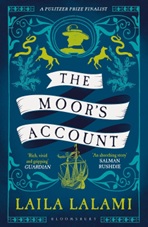
The Moor’s Account was first published in 2014 by Periscope Publishing and was longlisted for the Booker Prize. I was reminded of it earlier this year when Bloomsbury republished it in August, although I sought out a copy of the original cover (left) – the reissued version (right) feels quite generic and doesn’t do anything for me.
The Moor’s Account is a fictionalisation of real events. In the early sixteenth century, the Narváez expedition landed on the cost of present-day Florida seeking to explore, map, and claim territory for the Spanish crown. It was a disaster from the beginning, as the leaders of the expedition discovered a small amount of gold and allowed themselves to be led by greed, desirous of both fame and fortune. Through those errors in leadership as well as the disease, hunger, and the (entirely unsurprising) resistance of the indigenous population, the expedition was gradually reduced to just four survivors. Three got to share their story, but one man – a slave known only as Estebanico – never got to share his version of events. Here, Lalami gives him a voice, extrapolating from what is known and creating a colourful history for one of the first African explorers of the Americas.
It is fiction, and very little is known about Estebanico – Mustafa, as Lalami names him – in reality, but I love the story that the author has created for him here, showing him as a proud individual who worked as a merchant in Morocco before a change in his and his family’s fortunes forced him to sacrifice his own freedom to give his mother and siblings a chance to survive. It’s heartbreaking to see such a proud and spirited individual brought low, even as I understood the reasons behind the choices he made. As you might expect, Lalami remains sensitive to Mustafa’s plight, highlighting the arrogance and insensitivity of his fellow travellers who become increasingly reliant upon him as their numbers fall. Unfortunately, Mustafa is reliant upon them as well, understanding that there is safety in numbers, as much as he loathes the situation in which he finds himself and the man who claims ownership of him.
The treatment of the indigenous population at the hands of the Spanish is likewise handled with great sensitivity while leaving little room for doubt as to how they were viewed and treated by those seeking to colonise and suppress. And for the most part, that native population is hospitable to these explorers, particularly as the expedition becomes increasingly reliant upon the kindness of these strangers, often following the lead of the Spanish as things turn aggressive or to protect themselves and their own way of life as the Spanish begin to take advantage of their hosts. Lalami captures the issues of colonisation from the perspective of a bystander who has no agency, but can only watch, often in horror. It works so well in showing it from the perspective of one who understands it through his own experiences, yet is powerless to do anything about it.
The Moor’s Account moves at a relatively slow pace, sharing the trials and tribulations of the ill-fated expedition from a unique perspective. I loved the element of adventure throughout as we see these explorers struggle, even as I felt sympathy for Mustafa for being caught up in these events through no fault of his own. I knew nothing of this particular expedition going into the novel, but found it to be a compelling read that explores the themes of slavery and colonisation thoroughly and with great sensitivity throughout. Recommended.
 Jo's Book Blog
Sounds like a really interesting read Jo. Oh and I agree about the covers! x
Thanks, Nicki – something a little different, but I enjoyed it. And I’m glad it’s not just me! x